
Newsroom
Learning AI-Driven Drug Discovery Through an IMPULSE Staff Exchange
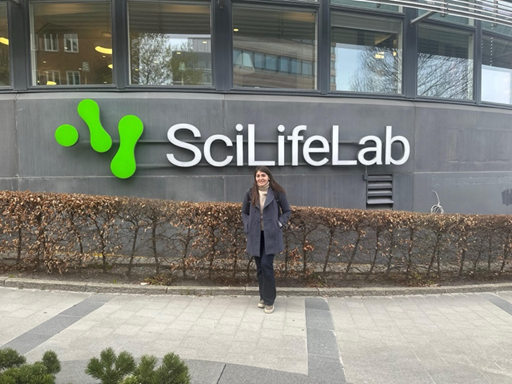
“It was very valuable to meet researchers from different countries and institutions, learn about their work, and exchange scientific ideas. These interactions helped me broaden my perspective, understand different research approaches, and build connections for possible future collaborations.” - says Dr. Elnaz Aledavood.
For five weeks in Stockholm, artificial intelligence and computational drug discovery became the focus of a cross-disciplinary collaboration between EU-OPENSCREEN partner sites CIB-CSIC in Madrid, Karolinska Institutet and SciLifeLab in Solna.
As part of the IMPULSE staff exchange programme under EU-OPENSCREEN, Dr. Elnaz Aledavood, a postdoctoral researcher in computational drug discovery at CIB-CSIC, joined the research group of Dr. Andreas Luttens to explore machine learning approaches for de novo compound design, an area increasingly shaping how new drug candidates are identified and prioritised.
Dr. Aledavood became interested in AI and machine learning because of their growing role in accelerating molecular design and improving the prediction of drug-like properties. She chose Karolinska Institutet and SciLifeLab specifically for the opportunity to work with Dr. Luttens, whose research focuses on AI- and machine learning-based approaches for de novo drug design.
“This closely aligned with my goal of learning how these methods can be applied to drug discovery and molecular design, especially for designing new therapeutic compounds,” she explains.
During the exchange, the collaboration focused on synthon-based design strategies, which use chemically relevant molecular fragments as building blocks for generating new compounds. The work also explored Thompson sampling approaches to guide compound generation and prioritise promising molecular candidates.
The collaboration resulted in the generation of a new series of compounds as potential Mac1 inhibitors, providing a starting point for future synthesis and in vitro testing.
Mac1 is a key research target for Dr Aledavood’s group at CIB-CSIC through their participation in the EU project Fragment-Screen. The target is of particular interest because of its role in viral replication and in helping viruses counteract host immune responses, making it a promising area for antiviral inhibitor development.
Alongside the computational work, the exchange provided an opportunity to work closely with researchers from different scientific backgrounds and research environments, reinforcing the value of international knowledge exchange in fast-evolving areas such as AI-assisted drug discovery.
The collaboration between CIB-CSIC, Karolinska Institutet, and SciLifeLab is continuing beyond the exchange period, reflecting one of the central aims of the IMPULSE programme: enabling sustained scientific collaboration through researcher mobility and shared expertise across Europe.