
Newsroom
Enabling Science Behind the Scenes Through an IMPULSE Staff Exchange
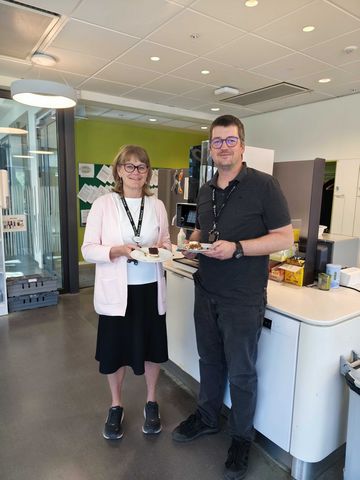
"The great and open atmosphere provided an excellent environment for all activities. The one-on-one meetings were a valuable opportunity to understand the diverse responsibilities within the team and to exchange views on management, strategies and career planning" says Michał Gładysz.
After working as an organic chemist, Michał Gładysz now supports science from a different perspective. As part of the Research Support Unit at the Centre of Chemical Biology, Institute of Bioorganic Chemistry of the Polish Academy of Sciences (IBCH PAS), Poland's EU-OPENSCREEN partner site, he helps coordinate the services, resources and collaborations that enable researchers to access the expertise and infrastructure they need. This transition from laboratory research to research support sparked Michał's interest in the IMPULSE staff exchange programme. He wanted to understand how another Screening Partner Site organises the processes that enable successful scientific collaborations, from welcoming researchers and coordinating projects to ensuring different teams work together effectively.
Karolinska Institutet (KI) in Stockholm, Sweden was a natural choice. As an established EU-OPENSCREEN Screening Partner Site with extensive experience in screening operations and user support, it provided an ideal setting to exchange knowledge and observe how operational practices are put into action. Rather than focusing on experiments at the laboratory bench, the exchange gave Michał a behind-the-scenes view of how projects move through a screening facility. By meeting staff members, researchers, and doctoral students, he gained new perspectives on project management and the collaborative culture that underpins research infrastructures.
"By creating more opportunities for partner sites to learn directly from one another, such staff exchanges strengthen collaboration, encourage the adoption of best practices, and help build an even more connected European research infrastructure" he explains.
For Michał, the greatest value of the exchange was seeing how effective collaboration is built through well-organised processes and open communication. He returned to IBCH PAS with practical ideas for strengthening coordination locally, while reinforcing the importance of sharing experience and learning from colleagues across the EU-OPENSCREEN network.