
Newsroom
Screening a 100,000-Compound Library Against the Malaria Parasite With an Assay Still Under Development
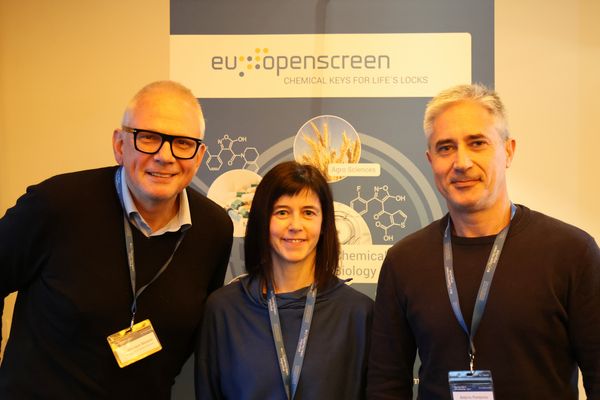
In Porto, António Pombinho’s team at the Institute for Research and Innovation in Health (i3S) had just begun building an assay to test compounds against the malaria parasite. In Geneva, Medicines for Malaria Venture was looking for somewhere to screen a library of 100,000 compounds against exactly that parasite.
Malaria caused an estimated 282 million cases and 610,000 deaths in 2024, most of them in sub-Saharan Africa. Resistance to existing drugs is spreading, and MMV’s response includes developing new chemical starting points: prioritizing molecules with novel mechanisms of action and a lower potential for resistance.
Finding them means testing vast libraries of compounds, many never previously evaluated against malaria, for activity against the parasite. That was the appeal of the European Chemical Biology Library.
“MMV initial goal was to evaluate a public library of diverse compounds assembled without disease-specific bias, with the objective to identify novel high quality start points for drug discovery projects. MMV was aware of the EU-OPENSCREEN opportunity to access its library as well as its specific scientific expertise” says Dominique Besson.
The hard part sat in Porto. Testing a library that size against a living parasite is not a biochemical measurement but a cellular one, and the assay had to remain consistent across every plate. As António Pombinho puts it, it “needed to be robust enough for screening such a high number of samples in a complex cellular assay”. The two teams built the screening cascade together and screened the library against Plasmodium falciparum using a gold-standard growth inhibition assay. It produced hits worth optimising.
For Dominique Besson, “the highlight was visiting I3S in Porto and meeting the team face to face”. For António Pombinho, it was the meetings in between: every stage was technically challenging, “but the frequent meetings and discussions with MMV scientists contributed greatly to building the confidence that we were on the right path”.
What began as one screening campaign is now a working relationship. MMV gained a new screening partner, and, as Dominique Besson puts it, the work with i3S “laid the foundation for a longer-term collaboration”.
“It was a fortunate coincidence that MMV contacted EU-OPENSCREEN at the right time,” says António Pombinho. “EU-OPENSCREEN was essential in its roles of providing access to the chemical library and in bringing users and partner sites together. Without these I believe this collaboration would not have happened.”
Dominique Besson and António Pombinho presented “Screening the European Chemical Biology Library to identify novel antimalarial compounds” at the EU-OPENSCREEN User Day 2026, on 24th November 2026 in Berlin.